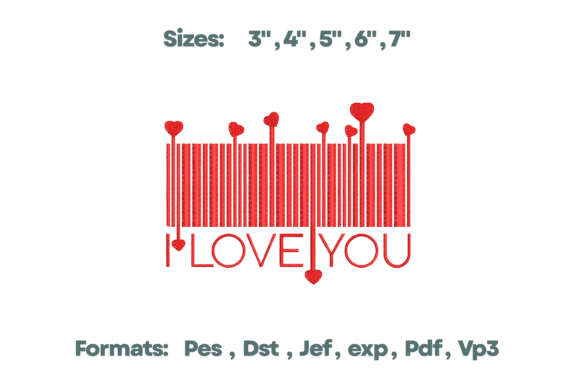
I Love You Barcode Embroidery Design Review
As an embroidery designer specializing in commercial branding and small business merchandise, I approach every new digital asset with a critical eye. When evaluating the I Love You Barcode Embroidery Design, my primary focus is not just its aesthetic appeal for Valentine's Day, but its structural integrity and versatility as a year-round branding element. This machine embroidery design offers a distinct departure from traditional romantic motifs, presenting an urban-inspired pattern that translates surprisingly well into modern retail and service industry applications. For shop owners, Etsy sellers, and apparel decorators, this design represents an opportunity to merge sentiment with contemporary visual language.
First Impressions: Modern Utility Meets Sentiment
Upon reviewing the I Love You Barcode Embroidery Design, the immediate impression is one of clean, industrial precision. Unlike ornate script or complex floral arrangements often associated with Valentine S Day embroidery, this design relies on linear geometry and high contrast. From a digitizing perspective, this is advantageous. The barcode format inherently utilizes straight stitches and satin columns, which generally register more cleanly on varied fabric textures than intricate fill patterns. The "urban-inspired" description holds true; it feels less like a greeting card and more like a streetwear label or a minimalist café logo. For a handmade product brand or creative studio, this aesthetic signals professionalism while retaining a playful, hidden message. It bridges the gap between decorative craft and functional brand identity, making it suitable for businesses that want to express appreciation without appearing overly saccharine.
Commercial Applications for Small Business Merch
The true value of this embroidery file lies in its adaptability across different merchandise categories. In my experience outfitting local businesses, I have found that linear designs perform exceptionally well in specific commercial contexts:
- Café and Bakery Aprons: The vertical orientation of the I Love You Barcode Embroidery Design fits perfectly on apron straps or centered chest pockets. It serves as a subtle conversation starter for staff interacting with customers, reinforcing a friendly brand personality without dominating the uniform.
- Retail Tote Bag Design: Canvas totes are a staple for boutiques and florists. This design works beautifully as a secondary mark near the bottom hem or as a primary graphic on the bag’s side gusset. The high stitch density typical of barcodes ensures the design remains crisp against the coarse weave of canvas.
- Cap Embroidery: Curved surfaces present challenges, but the narrow profile of this barcode motif makes it an ideal candidate for cap fronts or sleeve accents. It avoids the distortion issues common with wide, dense logos on structured headwear.
- Custom Apparel Tags: For clothing brands, this design can function as a branded neck label or hem tag. It adds perceived value to the finished product, transforming a standard garment into a premium item with a unique narrative element.
- Event Merchandise: For pop-up shops or anniversary events, this design offers a non-traditional alternative to heart logos. It appeals to a younger demographic and photographs well for social media, enhancing buyer engagement through shareable visual content.
Technical Considerations and Production Limits
While the I Love You Barcode Embroidery Design is versatile, it requires careful handling during production. As with any barcode-style digitization, legibility is paramount. There are specific scenarios where this design demands caution:
Fabric Texture and Stabilizer Selection
Barcode designs rely on sharp edges to maintain their visual code. On textured fabrics like terry cloth, fleece, or heavy knits, the fine lines can get lost or distorted. When using this design on such materials, you must use an appropriate stabilizer—preferably a cut-away or heavy tear-away—to prevent puckering and ensure the bars remain distinct. Without proper stabilization, the stitch density may cause the fabric to pull, rendering the barcode unreadable and unprofessional.
Size Reduction Risks
Small business owners often request miniature patches or sleeve cuffs. However, reducing this embroidery file below its recommended size can be disastrous. If the bars become too thin, they may turn into running stitches rather than satin columns, losing the barcode effect entirely. Always verify the minimum dimensions specified by the digitizer. If you need a smaller version for a patch or label, seek out a specifically resized file rather than shrinking the original design in your machine software.
Thread Color Contrast
This design depends entirely on contrast. A dark barcode on a black shirt will disappear, defeating the purpose of the merchandise. For dark uniforms or navy tote bags, ensure you are using high-viscosity white or metallic thread colors. Test the contrast ratio before committing to a full production run. Remember that thread sheen can affect readability under store lighting; matte threads sometimes offer better definition for barcode aesthetics than high-sheen rayon.
Impact on Brand Identity and Customer Trust
Incorporating the I Love You Barcode Embroidery Design into your product line does more than decorate; it communicates. For a florist or pet brand, it suggests a modern, thoughtful approach to customer relationships. It moves beyond generic clip art, signaling that the business invests in unique design assets. This attention to detail builds customer trust. When a buyer receives a handmade product with a cleanly embroidered, concept-driven tag, they perceive higher quality and care. Furthermore, because the design is gender-neutral and stylistically open, it broadens your market reach. It allows a business to participate in Valentine S Day marketing without alienating customers who prefer understated or alternative expressions of affection. This inclusivity is vital for long-term brand consistency and recognition.
Designer Notes for Successful Implementation
Before loading this digital embroidery file into your machine for a client order or inventory restock, follow these professional protocols to ensure a premium finished product:
- Verify Commercial Licensing: Before selling any merchandise featuring this design, confirm the license terms. Ensure you have the right to use the I Love You Barcode Embroidery Design on items intended for sale, not just personal use.
- Create a Printable Mockup: Never skip the approval phase. Place the design on a digital mockup of the actual garment or accessory to visualize scale and placement. Share this printable mockup with clients to manage expectations regarding size and positioning.
- Test Stitch-Out is Mandatory: Run a test on the exact fabric and stabilizer combination you plan to use. Inspect the spacing between bars. If the gaps are closing up, adjust your tension or switch to a thinner needle/thread weight.
- Check Hoop Size Compatibility: Ensure the design fits comfortably within your hoop with adequate margin for the presser foot. Crowding the hoop can lead to registration errors, especially with linear designs where misalignment is immediately obvious.
- Evaluate Beside Other Assets: Compare this design next to your existing logo and brand fonts. Does the stroke weight match? Is the style cohesive? Visual consistency across all custom apparel and patches strengthens your overall brand identity.
- Wash Test for Durability: If this design is destined for staff uniforms or frequently washed tote bags, launder your test swatch. Barcodes can fray if the lock stitches at the ends are insufficient. Verify that the design survives industrial laundering before mass production.
The I Love You Barcode Embroidery Design is a robust tool for the modern embroiderer. By treating it as a functional branding element rather than mere decoration, small businesses can create merchandise that is both emotionally resonant and commercially viable. Whether applied to a boutique apron or a limited-edition cap, success lies in respecting the technical requirements of the medium and aligning the design with a clear, professional brand strategy.