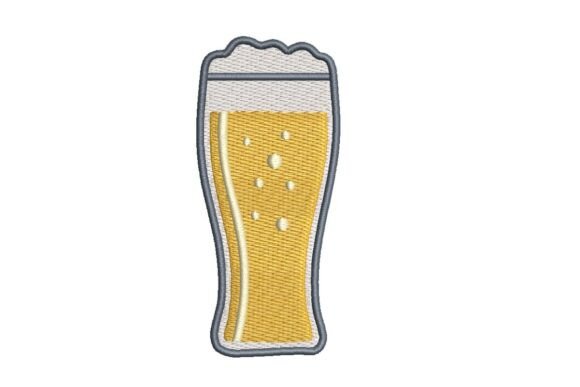
Glass of Beer Embroidery: A Designer’s Review
As an embroidery designer who has digitized and reviewed thousands of files for commercial production, I approach every new machine embroidery design with a critical eye. When evaluating the Glass of Beer Embroidery file for potential business use, my primary focus is not just on aesthetics, but on stitch integrity, scalability, and brand application. The product description promises a crisp pint with a frothy head and bubbly carbonation details using clean lines. From a professional standpoint, this suggests a digitizing style that prioritizes clarity over excessive complexity, which is exactly what small business merchandise requires to maintain legibility and durability across various applications.
Visual Personality and First Impressions
Upon reviewing the concept of Glass of Beer Embroidery, the immediate impression is one of classic hospitality and craftsmanship. Unlike overly stylized or abstract drink icons, a "perfectly poured pint" communicates tradition, quality, and attention to detail. For a business owner, this visual cue is powerful. It strikes a balance between playful and professional, making it versatile enough for a rustic brewery taproom, a modern gastropub, or even a boutique bottle shop. While this item is categorized under Wine in some databases, its specific imagery targets the beer and spirits market directly. The mention of "clean" lines in the description is a significant positive indicator; it implies the embroidery file avoids muddy fill stitches and overlapping chaos, ensuring the finished product looks sharp rather than bulky.
Commercial Applications for Small Business Merch
For apparel decorators and Etsy sellers, versatility is key to ROI. This design shows strong potential for multiple revenue streams within small business merch. Here is how I envision this design performing in real-world commercial scenarios:
- Staff Uniforms and Aprons: The most obvious application is apron embroidery for bartenders and servers. A chest logo placement of this pint glass adds instant professionalism to staff attire without being obtrusive. It serves as a subtle branding element that reinforces the establishment's theme.
- Retail Merchandise: For breweries or bars selling goods, this design translates exceptionally well to tote bag design and dad hats. The iconic nature of a beer glass makes it a standalone graphic that customers want to wear, independent of heavy text logos.
- Event Branding: For festivals, weddings, or corporate happy hours, this design works beautifully on napkins, koozies, or gift bags. It acts as a thematic anchor that ties disparate items together visually.
- Patch Production: As an embroidered patch, the defined outline of a pint glass allows for clean merrowed edges. This is crucial for businesses looking to create collectible patches or uniform insignia that withstand wear and tear.
Technical Considerations and Production Limits
While the Glass of Beer Embroidery design appears robust, experienced digitizers know that execution matters as much as the file itself. There are specific environments where this design must be handled with care to avoid production failures.
Cap Embroidery and Curved Surfaces
Cap embroidery presents unique challenges due to the curved surface and limited sewing field. If the carbonation bubbles mentioned in the description are too small or densely packed, they may cause needle breaks or registration issues on structured caps. Before running a bulk order on headwear, verify that the bubble details are large enough to remain distinct when compressed onto a curve. You may need to simplify the stitch density specifically for cap fronts to prevent puckering.
Fabric Texture and Stabilizer Choices
The "frothy head" detail likely utilizes satin stitches or light fills. On textured fabrics like canvas tote bags or ribbed knit shirts, these delicate details can get lost. Proper stabilizer selection is non-negotiable here. For a crisp pint glass on a rough fabric, I recommend a heavy cut-away stabilizer to support the column stitches defining the glass rim. Without adequate backing, the glass shape may distort during washing, compromising the professional look of your custom apparel.
Size Reduction Risks
Small business owners often want to scale designs down for sleeve cuffs or pocket accents. However, reducing a design with internal details like carbonation bubbles has limits. If you shrink the Glass of Beer Embroidery below 2 inches wide, those internal details may turn into thread clumps. Always check the minimum recommended size in the digital embroidery file metadata. If the file lacks this data, perform a reduction test sew-out before committing to production.
Impact on Brand Identity and Customer Trust
In the competitive landscape of handmade products and local businesses, visual consistency builds trust. Using a high-quality, clean-lined design like Glass of Beer Embroidery signals to customers that the business cares about presentation. Sloppy, dense, or poorly registered embroidery suggests a lack of quality control that can bleed over into perceptions of food safety or service standards. Conversely, a sharp, well-executed pint glass enhances brand identity by associating the business with precision and care. For Etsy sellers, listing photos featuring this design on actual merchandise (rather than just digital renders) significantly boosts buyer engagement because it proves the design assets translate well to physical goods.
Professional Designer Notes for Pre-Production
Before loading this embroidery file into your machine for a client job or inventory run, follow this professional checklist to ensure success:
- Verify Commercial Licensing: Never assume a design is cleared for business use. Check the license terms included with the Glass of Beer Embroidery purchase. Ensure you have the right to sell finished items or use the design on paid staff uniforms.
- Create a Printable Mockup: Before stitching, place the design digitally on a photo of the actual garment or item. This helps visualize scale and placement relative to seams, pockets, and zippers. A printable mockup also aids in getting client approval before wasting materials.
- Test Thread Color Contrast: Beer is typically gold, amber, or stout black, while foam is white or cream. Test these thread colors against your base fabric. Yellow thread on a tan apron will disappear; you may need a darker outline or a different shade of gold to ensure the pint glass pops.
- Inspect Spacing and Trims: Open the file in your editing software to check for unnecessary color changes or long jump stitches. Efficient digitizing reduces production time. If the foam and liquid are separate colors, ensure the transition points are clean to avoid gaps.
- Run a Fabric-Specific Test: Do not rely solely on standard poly-mesh tests. Sew out the design on the exact fabric texture you intend to use for the final run. Adjust tension and stabilizer based on this real-world sample.
- Compare Beside Other Assets: If this pint glass is part of a larger collection (e.g., matching wine glasses or pretzels), sew them out side-by-side. Ensure the stitch density and line weights match so your handmade product line looks cohesive.
Evaluating Value for Embroidery Shops
For shops offering commercial embroidery services, the Glass of Beer Embroidery design represents a reliable staple asset. Its universal appeal means it can be marketed to a wide range of clients, from microbreweries to wedding planners. However, the true value lies in the digitizing quality. A design described as having "clean" lines usually requires less post-production trimming and fewer re-runs due to errors. By validating the file through testing and understanding its limitations regarding size and substrate, you transform a simple digital file into a profitable, repeatable product line. Whether used for high-volume uniform orders or exclusive limited-edition patches, this design offers the structural simplicity necessary for professional results while retaining the character needed to connect with customers.